Tuesday, 6 April 2021

Miyake-jima

We stayed overnight on Miyake-jima between the ferry rides and while on the island, we spent some time, of course!, on birding.

Japanese White-eye (Mejiroメジロ) 


They are called Shichito-mejiro(シチトウメジロ), considered as a subspecies of the Japanese white-eye found in mainland Japan.


Varied tit (Yamagaraヤマガラ)


The lodging we stayed in had a bird friendly garden, which had a few feeders and a birdbath. Lovely!

The Varied tit is also a subspecies and called the Owston Yamagara(オーストンヤマガラ). Unlike the white-eye, the varied tit shows obvious differences. The ones we see in Chiba have a white forehead, nape and cheeks whereas the Owston's is orange-brown in those parts. I found the calls are a bit different too.


Oriental (Grey-capped) greenfinch (Kawarahiwaカワラヒワ)


Mr Minowa, our guide, said that these greenfinch are likely to be a subspecies called Oo-kawarahiwa (オオカワラヒワ), which are wintering here and soon going back to places like Kamchatka, the Kuril Islands and Sakhalin. Oh dear, I don't think I could follow all of the subspecies!


Japanese Robin (Komadoriコマドリ)


The Japanese robin on mainland Japan is a summer bird but the subspecies found in the Izu Islands are residents and called Tane-komadori(タネコマドリ). The obvious difference is that Tane-komadori lacks a black band between its orange breast and pale grey belly. Their songs are beautiful and they start singing well before the dawn just like the European robin, although the Tane-komadori doesn't sing during the winter.


Japanese pygmy woodpecker (Kogeraコゲラ)


【Warning】 Another subspecies!😂
Miyake-kogera(ミヤケコゲラ) are a subspecies of the Japanese pygmy woodpecker only found in the Izu islands and Yaku-shima but it is almost impossible to tell the difference by sight.
 

Japanese Woodpigeon (Karasubatoカラスバト)


No more subspecies, phew.

The Japanese woodpigeon is only found in islands in the far eastern region. Its extremely secretive and nervous character makes it very difficult to spot them even though their calls are often heard. It would be lucky if you spot them flying very fast between hills or over the canopy but we were truly lucky to see one in a tree. 


We had 8 target birds to see on the island - Izu thrush, Ijima's leaf warbler, Japanese woodpigeon, Owston's varied tit, Wren (subspecies), Japanese robin, Japanese white-eye, Japanese pygmy woodpecker - and thanks to our wonderful guide, Mr Minowa, we had a great view of each of them.

Excellent!


The map shows the locations of the Izu Islands and ferry routes.

You can visit the page of our trip to Hachijo-jima in 2014 by clicking here ↓

Hachijo-jima 1

Hachijo-jima 2 

Hachijo-jima 3


Monday, 5 April 2021

Albatross

During a ferry trip to the Izu Islands, we saw our first Short-tailed Albatrosses (Ahodoriアホウドリ)!

The left one is a young Short-tailed albatross with a Laysan albatross (Ko-ahodoriコアホウドリ) (the smaller white headed one on the right).

I wish I could have taken photos of them flying gracefully but got too excited to take my eyes off them every time they were close to the ship.


These are Black-footed albatrosses (Kuroashi-ahodoriクロアシアホウドリ), which are breeding on some of the islets and islands in the Izu Islands, so we saw more of them than the other two albatrosses species.


Streaked shearwaters (Oomizunagidoriオオミズナギドリ) are the most abundant species in the area and can be seen almost all the way to Hachijo-jima Island. 


There is no photo but we saw Parasitic & Long-tailed skuas, Japanese murrelets, Leach's storm petrels, Black-tailed gulls, Japanese cormorants and a Grey heron (Aosagiアオサギ).

The trip was led by an excellent guide, Mr Minowa, who is an ornithologist, naturalist and wildlife illustrator. It was fascinating to know about seabirds and actually see them in their element.


Mr Minowa's new book―"The Handbook of Seabirds" has detailed information with pictures of all the seabirds which are likely to be seen around Japan. Very handy indeed!


Streaked Shearwater

 lots and lots and lots of Streaked shearwaters!! (Oomizunagidoriオオミズナギドリ)


Monday, 8 February 2021

Tundra Bean Goose

There have been a few wintering Tundra bean geese (Hishikuiヒシクイ) by Lake Imbanuma for the last few winters and this winter three have been seen on the same paddy fields as before.

resting in the middle of the fields


 They started foraging in the fields. Still far...


and flew towards the even farther end of the fields...


 There happened to be a Black-eared kite (Tobiトビ) sitting on the field and a flock of Lapwings (Tageriタゲリ) flying over the edge of the patch in one frame.


The geese & lapwings flew because they saw a better option - a working tractor! 

more than 4 Grey herons (Aosagiアオサギ) were following the tractor - one was actually getting a ride on the tractor! and quite a few Lapwings were on the churned up fields. 

Happy evening snacking time!


Time for heading back home for us as well. Bye!


Sunday, 7 February 2021

Imba-numa

great views of Lake Imbanuma


everybody's favourite, Kanta-kun (great white pelicanモモイロペリカン), not an ornament😁

The gentleman is a friend of Kanta-kun, feeding him from what he has caught in the lake.

Eastern Buzzard (Nosuriノスリ)

Falcated ducks (Yoshigamoヨシガモ)

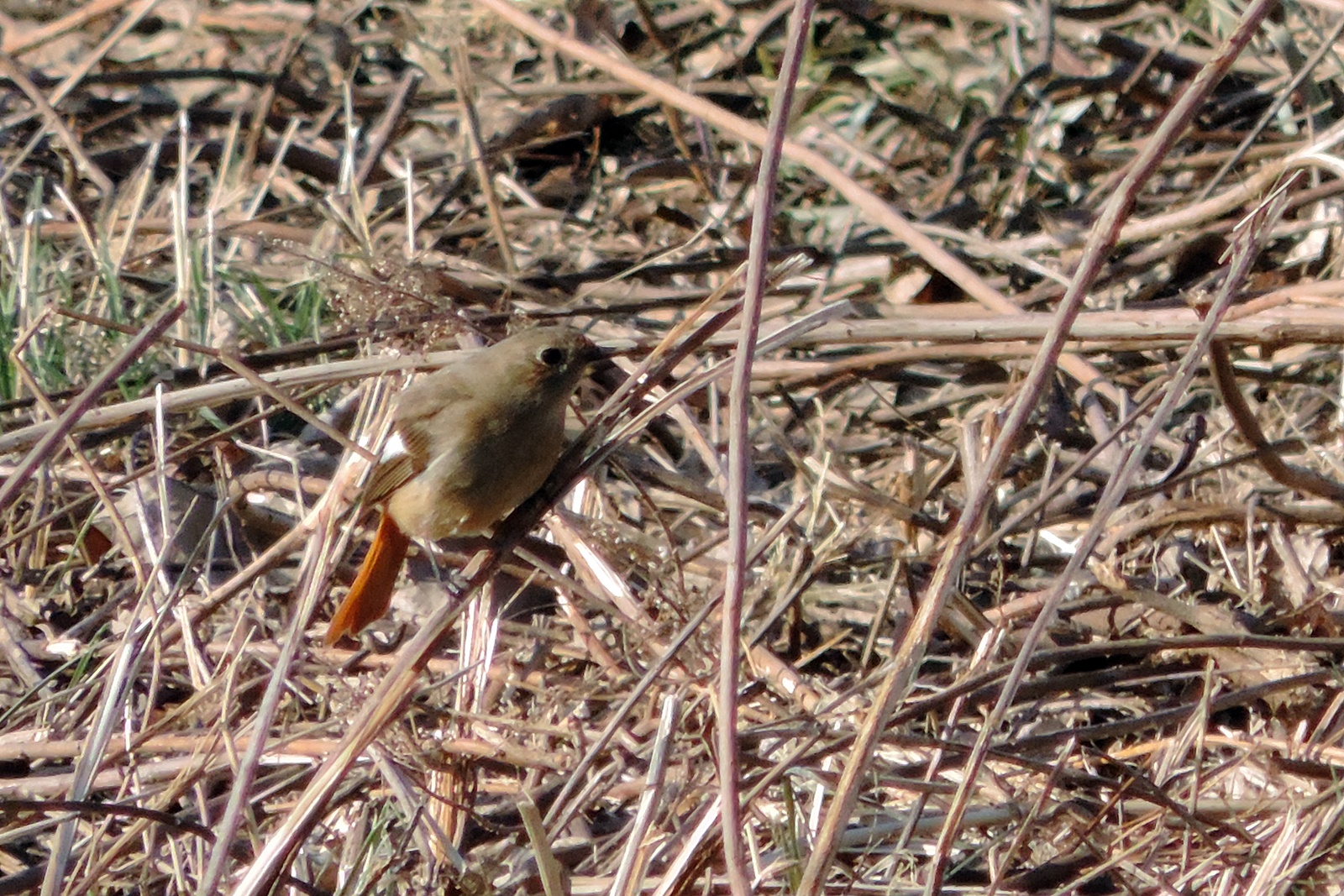
female Daurian Redstart (Jobitakiジョウビタキ)
 

a pair of Little grebes (Kaitsuburiカイツブリ), they were calling each other many many times.

a sign of spring!


a pair of Moorhens (Banバン), another sign of spring💗


Great white egret (Daisagiダイサギ)

Eastern Marsh Harrier (Chuhiチュウヒ) skimming over the reedbeds


 It was just great to be there, seeing lots of birds within a few hours!

Saturday, 6 February 2021

Water Rail

While we were watching waterfowl, a Water rail came out briefly through the reeds just under the bridge we were standing on. We waited for it to come back and it did!


very shy indeed!


It went back to the shelter very quickly. I like its tail sticking straight up!

It actually came out in the open rather more often than I expected it to do; possibly it felt safe when there were coots and moorhens foraging by the reeds? or it was desperate for food? And this wasn't the only one there, but one or two more were skulking in nearby reeds. wonderful!


Water rails seen in Japan used to be considered as a subspecies of the Water rail Rallus aquaticus,but now they are a species on its own, Rallus indicus, called the Eastern water rail or Brown-cheeked rail in English. Kuina クイナ is its Japanese name. 

(no sound)

Friday, 5 February 2021

Waterfowl

Lake Imbanuma is one of the great wildlife habitats in Chiba and around as it has two large lakes surrounded by reedbeds, paddy fields and some woodlands. It is not particularly protected (very few protected areas in Japan overall anyway) but still, it provides what wildlife needs. 


We went there on a bright, calm day and that's what we saw! 


ducks, ducks, and more ducks!! 

There were Pintails (Onagagamoオナガガモ), Mallards (Magamoマガモ), Spot-billed ducks (Karugamoカルガモ), Teals (Kogamoコガモ), Baikal teals (Tomoegamoトモエガモ), Falcated ducks (Yoshigamoヨシガモ), Smews (Mikoaisaミコアイサ) and

Great crested grebes (Kammuri-kaitsuburiカンムリカイツブリ), Little grebes (Kaitsuburiカイツブリ), Cormorants (Kawauカワウ), Coots (Oobanオオバン), Moorhens (Banバン), Great egrets (Daisagiダイサギ), Little egrets (Kosagiコサギ), Grey herons (Aosagiアオサギ) were seen among the ducks.


Occasionally, ducks were spooked by something and flew up, which was quite a spectacle.


Once a Peregrine falcon (Hayabusaハヤブサ) appeared from nowhere and turned the peaceful scene into chaos. That time luck was on the ducks' side though.