Showing posts with label larks. Show all posts

Friday, 25 April 2025

Kujukuri

Another migration season, another breeding season.


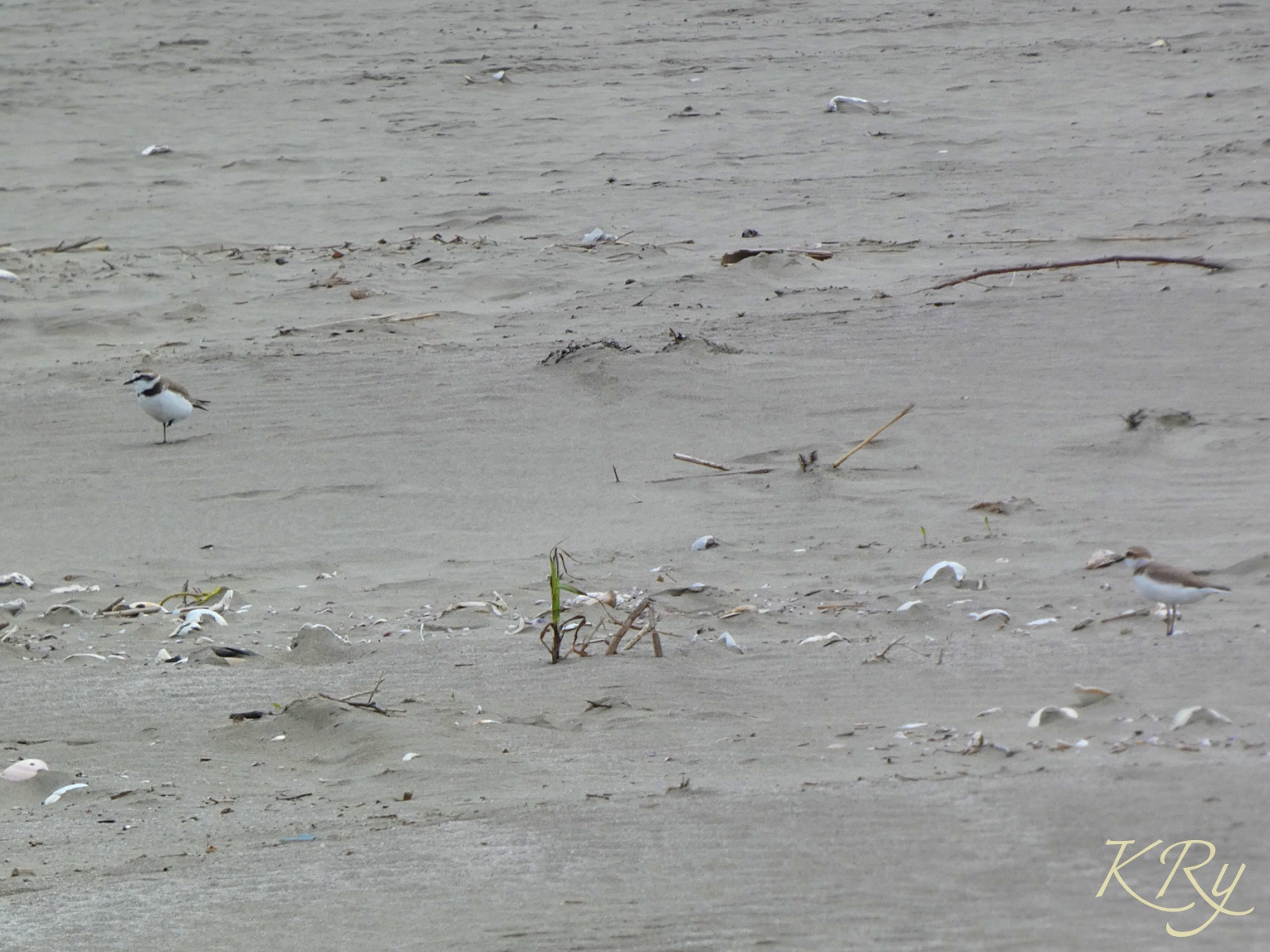
Lesser sand plovers (Medaichidoriメダイチドリ) are resting / fuelling up en route to their breeding grounds.

I believe that the Lesser sand plover has been split into two independent species - the Siberian Sand Plover and the Tibetan Sand Plover. I am not still sure which is which, so please forgive me for using the old English common name.

a Kentish plover (Shirochidoriシロチドリ)

Kentish plovers also migrate but probably not a long distance like only within Japan or to/from the eastern coast of the Asian continent.


Some birds, like this one, just have made a dent in the sand and sat on it as if they were trying to work out the nest was comfortable enough to sit for a long time. 

Quite a few Skylarks were singing over the grassland on the edge of the beach.


Thursday, 25 April 2019

Inage Yacht Harbour

Chiba-city put up a rope-fence around the possible little tern breeding site to protect the birds again for this year.


I went to see if any little terns have arrived as I do volunteering for putting up the fence as well as monitoring the birds for the last couple of years.
A pair of Little Ringed Plovers (Kochidoriコチドリ) were looking good:)

Hope there'll be Little Ringed Plover chicks dashing around the beach later on!

A male Skylark (Hibariヒバリ) was busy singing as well.


There was no sign of little terns yet but it was still early and I was happy to see LR plovers and skylarks getting ready for the season:)

Saturday, 16 March 2019

Spain V - Doñana National Park

Small birds were much harder to take photos of as the area was so open like this.

I managed to shoot some of them.

Crested Larks (Kammuri-hibariカンムリヒバリ) - resident


Spanish Sparrows (Supein(Spain)-suzumeスペインスズメ) - resident
Both are females, which very much resemble the female of the House Sparrow.
I failed to take photos of males, which have a chestnut-coloured crown and nape.

Corn Buntings (Hata-hoojiroハタホオジロ) - resident
They were singing every 30 meters or so and probably one of the most sighted birds during our 2 daytrips.

Common Snipes (Tashigiタシギ) - wintering

Western Yellow Wagtails Motacilla flava iberiae 
(no Japanese name ニシツメナガセキレイ?) - summer birds

White Wagtails Motacilla alba alba? (Haku-sekireiハクセキレイ) - resident

Common Sandpiper (Isoshigiイソシギ) - resident
& Corn Bunting & House Sparrow (Ie-suzumeイエスズメ)

Common Sandpipers & House Sparrows - resident

a common view of swampy areas
Little Egrets (Kosagiコサギ), Great Egrets (Daisagiダイサギ), Grey Herons (Aosagiアオサギ), Purple Herons (Murasakisagiムラサキサギ), Western Cattle Egrets (Nishi-amasagiニシアマサギ), Eurasian Spoonbills (Herasagiヘラサギ), Purple Swamphens (Seikeiセイケイ), Glossy Ibis, White Storks were the most common in those habitat. We heard a Great Bittern (Sankanogiサンカノゴイ) booming!

That was about it for the day 1 in Doñana National Park with Vicent.
We counted more than 90 species, which I think was great.

a deer was watching us watching birds:)


Click here for Vicent's Doñana Wings

Sunday, 14 June 2015

Reedbeds

The Japanese Swamp Warbler (Osekkaオオセッカ) and the Japanese Reed Bunting (Kojurinコジュリン) are endemic to East Asia and found in local and restricted areas even in Japan. One of their few breeding grounds is the reedbeds by the Tonegawa in Chiba, so off we went to appreciate those rareities.


This kind of vast reedbeds are as rare as the birds as most of the riverbanks in Japan are embanked with concrete and the reedbeds were cut and drained for agriculture or housing.

The Japanese Swamp Warbler
Without their display flight, it would've been impossible for us to spot them but thankfully they were everywhere in the reeds and flew up singing their hearts out.

I was just waiting for one or two to land on a reed closer to us for a shot:) (Well, most of them landed miles away from us though.)

We moved to Kojurin Koen (literally means 'Park of the Japanese Reed Bunting') - the park is in the middle of nowhere and we got lost in the vast paddie fields. We drove on a tiny path between the fields and eventually got there. phew!

And there he was!
a male Japanese Reed Bunting

A male has a completely black hood down to his lower neck unlike the common reed bunting (which is a winter visitor around here).

Very lucky for us, he was feeding a fledgling on a path and left the young there on its own.
The young one looked a bit like a Black-headed Bunting (Aoji).
It hopped into the grass, which seemed very wise. On the path it was too exposed! 


We also saw/heard many, many Oriental Reed Warblers (Oyoshikiriオオヨシキリ), Black-browed Reed Warblers (Koyoshikiriコヨシキリ), Zitting Cisticolas (Sekkaセッカ), Skylarks (Hibariヒバリ), Great Egrets (Daisagiダイサギ), Little Egrets (Kosagiコサギ), Grey Herons (Aosagiアオサギ), Barn Swallows (Tsubameツバメ) and Sparrows (Suzumeスズメ), and some Cormorants (Kawauカワウ), Spotbilled Ducks (Karugamoカルガモ), Little Ringed Plovers (Kochidoriコチドリ), Grey Starlings (Mukudoriムクドリ), Japanese Bush Warblers (Uguisuウグイス), and a Great Crested Grebe (Kammurikaitsuburiカンムリカイツブリ), Moorhen (Banバン) and 3 unidentified raptors, which we think were Japanese Sparrowhawks.


Black-browed Reed Warblers

a lone Great Crested Grebe

a Grey Heron landed near a fisherman:) cheeky!

Skylarks

Friday, 12 June 2015

Kemigawa no Hama

I went back to see if any Little Terns (Koajisashiコアジサシ) had become interested in the patch by the Yacht Harbour.

http://birdinginjapan.blogspot.co.uk/2015/04/ready-for-little-terns.html

and there she was!

and her partner standing a few yards away from her.

These were the only pair breeding within the protected area. I feared that they would not succeed to be honest...

Some plovers were near the little terns.

A Kentish Plover (Shirochidoriシロチドリ), looking like she was sitting on eggs.

6 more Kentish Plovers were in and around the area and I hope they will choose the area for their breeding ground.

a rare (on this particular beach) Lesser Sand Plover (Medaichidoriメダイチドリ)


A male Skylark (Hibariヒバリ) was singing in the air for more than half an hour while I was there. He touched down the ground and flew up singing vigorously again!


*** sad news ***
The Little Terns seemed to have abondoned their nest as there were no eggs left in it around 21/June. No one knows for sure about the disappearance of their eggs, perhaps by crows, cats, or rats? Who knows. Anyway, there is little hope for this season. Very sad.