It was a lovely day and now is the time for all sorts of flowers and blossoms 🌺🌼


and it's a very busy time for parent birds to bring up their little ones.
Even only a short stay in the park made me smile and feel extremely happy 😍
It was a lovely day and now is the time for all sorts of flowers and blossoms 🌺🌼
and it's a very busy time for parent birds to bring up their little ones.
Even only a short stay in the park made me smile and feel extremely happy 😍
After moving, I've driven past the park every other day but never stopped.
Today, I finally decided to cycle there to have a look at the place and birds there.

Long-tailed tit (enagaエナガ)

Japanese Tit (shijukaraシジュウカラ)
.JPG)
Varied Tit (yamagaraヤマガラ)
.jpg)
I did not see a wide range of birds or a rare one but still, the park was full of bird calls and peaceful:)
The ground of the woodland was still covered with thick snow but we had chance to see woodland birds near feeders.
Jay (akesuカケス) - a subspecies found in Hokkaido has a very distinct cinnamon coloured head.


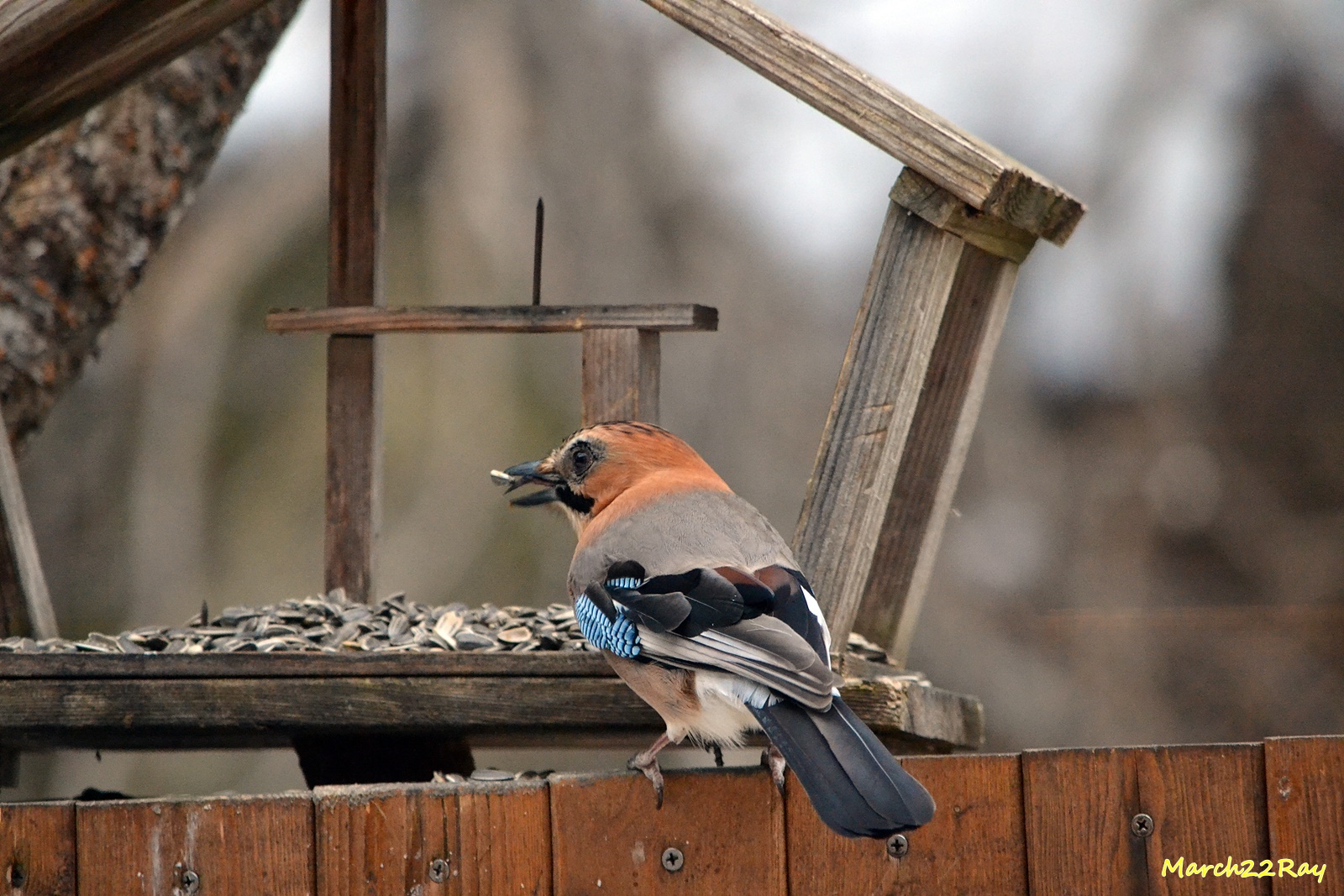
We had never seen so many Jays in one place!
Nuthatch (Gojukaraゴジュウカラ) - a very white underparts compared with the ones we are familiar in Britain.


Dusky thrush (Tsugumiツグミ) & Jay

Japanese tit (Shijukaraシジュウカラ)

Long-tailed tit (Shimaenagaシマエナガ) - completely white face


Carrion crow (Hashibosogarasuハシボソガラス)


All of a sudden, the little ones started to be agitated with alarm calls, and this is why: a beautiful Red fox (Kitsuneキツネ)

The unexpected heavy snowfall was a bit of blessing for me because if I put out little something for the birds in the garden, say, even an apple, it'd definitely attract common but lovely garden birds as feeding birds in gardens is not a popular practice in Japan. It is not just an apple from me though, of course!
the Guard of the Apple😄💂 - Brown-eared bulbul (Hiyodoriヒヨドリ)


Dusky Thrush (Tsugumiツグミ)


Don't worry, I cracked ice in the basin so that birds can have access to the water👍
Japanese white-eye (Mejiroメジロ)

This is actually a satsuma-shaped feeder 😁 a birthday present from my husband🎁
It has sometimes strawberry jam and at other times chopped-up apple cores in it.

Japanese tit (Shijukaraシジュウカラ)


Oriental turtle dove (Kijitaboキジバト)

Grey (White-cheeked) starling (Mukudoriムクドリ)
A starling came to our apples for a couple of days in a row before Christmas but we haven't seen any since then.I'm hoping the snow will melt quickly so that birds and other wildlife can have a better chance to survive the winter.
We stayed overnight on Miyake-jima between the ferry rides and while on the island, we spent some time, of course!, on birding.
Japanese White-eye (Mejiroメジロ)


They are called Shichito-mejiro(シチトウメジロ), considered as a subspecies of the Japanese white-eye found in mainland Japan.
Varied tit (Yamagaraヤマガラ)


The lodging we stayed in had a bird friendly garden, which had a few feeders and a birdbath. Lovely!
The Varied tit is also a subspecies and called the Owston Yamagara(オーストンヤマガラ). Unlike the white-eye, the varied tit shows obvious differences. The ones we see in Chiba have a white forehead, nape and cheeks whereas the Owston's is orange-brown in those parts. I found the calls are a bit different too.
Oriental (Grey-capped) greenfinch (Kawarahiwaカワラヒワ)


Japanese Robin (Komadoriコマドリ)


The Japanese robin on mainland Japan is a summer bird but the subspecies found in the Izu Islands are residents and called Tane-komadori(タネコマドリ). The obvious difference is that Tane-komadori lacks a black band between its orange breast and pale grey belly. Their songs are beautiful and they start singing well before the dawn just like the European robin, although the Tane-komadori doesn't sing during the winter.
Japanese pygmy woodpecker (Kogeraコゲラ)


Japanese Woodpigeon (Karasubatoカラスバト)


The Japanese woodpigeon is only found in islands in the far eastern region. Its extremely secretive and nervous character makes it very difficult to spot them even though their calls are often heard. It would be lucky if you spot them flying very fast between hills or over the canopy but we were truly lucky to see one in a tree.
We had 8 target birds to see on the island - Izu thrush, Ijima's leaf warbler, Japanese woodpigeon, Owston's varied tit, Wren (subspecies), Japanese robin, Japanese white-eye, Japanese pygmy woodpecker - and thanks to our wonderful guide, Mr Minowa, we had a great view of each of them.
Excellent!
 The map shows the locations of the Izu Islands and ferry routes.
You can visit the page of our trip to Hachijo-jima in 2014 by clicking here ↓
