Showing posts with label calidris sandpipers. Show all posts

Saturday, 2 July 2022

Kujukuri, Chiba

 On a gorgeous summer day, going to Kujukuri is one of the best options for birding.

 
Through a scope, a small group of waders were seen foraging on the beach.
 
Lesser Sandplover (Medaichidoriメダイチドリ)

a Terek Sandpiper (sorihashishigiソリハシシギ) was resting on a rubbish heap..

Kentish Plover (shirochidoriシロチドリ)

saw some Little ringed plovers, Little terns and some more. 

Kujukuri never disappoints me, or I even could say with confidence, any birdwatcher in all season.

Wednesday, 6 January 2021

Birds in Urayasu

 It doesn't look so wildlife friendly (nor human-friendly) but wildlife somewhat find themselves quite at home on the water and around it.

Lots of Greater scaups (Suzugamoスズガモ)

Apparently, there was one LESSER scaup somewhere in the area but we didn't spend time on searching for it. Does seem like a mission impossible doesn't it?!

Common sandpiper (Isoshigiイソシギ)

Sanderling (Miyubishigiミユビシギ)

Water Pipit (Tahibariタヒバリ)

Vega gull (Segurokamomeセグロカモメ)

Coots (Oobanオオバン)

Slavonian (Horned) grebe (Mimikaitsuburiミミカイツブリ)

a young Peregrine (Hayabusaハヤブサ)


It was a long walk alongside the embankment but was pleasant in the sun and with lots of birds.

Tuesday, 15 January 2019

The Pacific II

One of the things which amazed me at the coast was the number of common ducks I see in urban parks and ponds, such as the Mallard (Magamoマガモ) and the Spot-billed Duck (Karugamoカルガモ). They can be hardy, too!


Thousands of them were out in the open sea, floating on the choppy water. 
Some can be seen as far out as a kilometre from the shore, according to Mrs M.


I had assumed that they were freshwater ducks. How wrong I was! 

A flock of Dunlins (Hamashigiハマシギ) and Sanderlings (Miyubishigiミユビシギ)were having a rest with some Spot-billed ducks.


Kentish Plovers (Shirochidoriシロチドリ) on the beach
These plovers are resident in the area. 

Friday, 20 April 2018

Inage Kaihin Beach

The Little Tern season has come again and I went to Inage Kaihin Park to help put up the ropes around the area where Little terns are likely to make their colony.


The project leader said he'd seen 2 little terns already, so, fingers crossed!

After the hard work, I walked in the park and looked for the signs of spring:)

Yes!

This Black-headed Gull (Yurikamomeユリカモメ) turned into summer plumage already.
BH gulls don't breed in the area so today could be the last day to see them on this beach for a while.

On the concrete breakwater were a Whimbrel (Chushakushigiチュウシャクシギ),
Sanderlings (Miyubishigiミユビシギ),
 and Wigeons (Hidorigamoヒドリガモ).

Whimbrels and Sanderlings are stopping on their way to their breeding grounds and Wigeons are wintering birds and most of them have left for their breeding grounds.

Some Greater Scaups (Suzugamoスズガモ) were still there with the Wigeons.

Another BH Gull was foraging on the shore, busy running up and down!

Wednesday, 1 November 2017

Sanderlings in Akanehama


Akanehama

In Akanehama, one of the good birdwatching spots for the wintering birds, many birds have already arrived as expected.

Greater Scaup (Suzugamoスズガモ)
Thousands of them have arrived and most of them were floating a bit far away from the shore but these ones were resting at the river mouth in a small group.

Great Crested Grebe (Kammuri-kaitsuburiカンムリカイツブリ)
A few hundred or even a thousand have arrived all in winter plumage.

Under the ugly concrete breakwater blocks, an underwater stream was coming out and a lots of ducks and other birds seemed to be having a feast.
There were Coots (Oobanオオバン), Wigeons (Hidorigamoヒドリガモ), Teals (Kogamoコガモ), Black-headed Gulls (Yurikamomeユリカモメ) and several Greater Scaups in that huge gathering.

A lone Great Egret (Daisagiダイサギ) was stretching his neck.
Suddenly he jumped and skimmed the water surface with his long beak while flying.
I'd never seen an egret hunting in such an agile manner!

A Vega Gull (Segurokamomeセグロカモメ) found a lucky snack!

Sanderlings (Miyubishigiミユビシギ) appreciated the small sandy 'beach' area.


I expected to see more Cormorants (Kawauカワウ) but this one was the only one on that day.

Wintering birds were found on land as well.

Daurian Redstart (Jobitakiジョウビタキ) female

Bull-headed Shrike (Mozuモズ) male

More and more wintering birds will be arriving and some will stay in this area. I'd like to go back there in a month or so to see if I can find new arrivals.

Saturday, 3 October 2015

Yatsuhigata II

Some wintering ducks arrived in Yatsuhigata and I saw Pintails and Teals on that day.

Teals (Kogamoコガモ) were busy dabbling on the surface of the mud. 
The light wasn't great for taking photos but they came quite close to the embankment.
Males are now in eclipse plumage so it was quite hard to identify them as a male or female.
(especially when their bills were coated in mud!!)

A flock of Pintails (Onagagamoオナガガモ) was in the middle of the pool.

There were not so many waders as I'd thought there'd be. Autumn migration is towards the end.

A lone Ringed Plover (Hajirokochidoriハジロコチドリ) was foraging at low tide.
Ringed Plovers are spotted in Chiba far more infrequently than Little Ringed Plovers so I must say I was very lucky*)

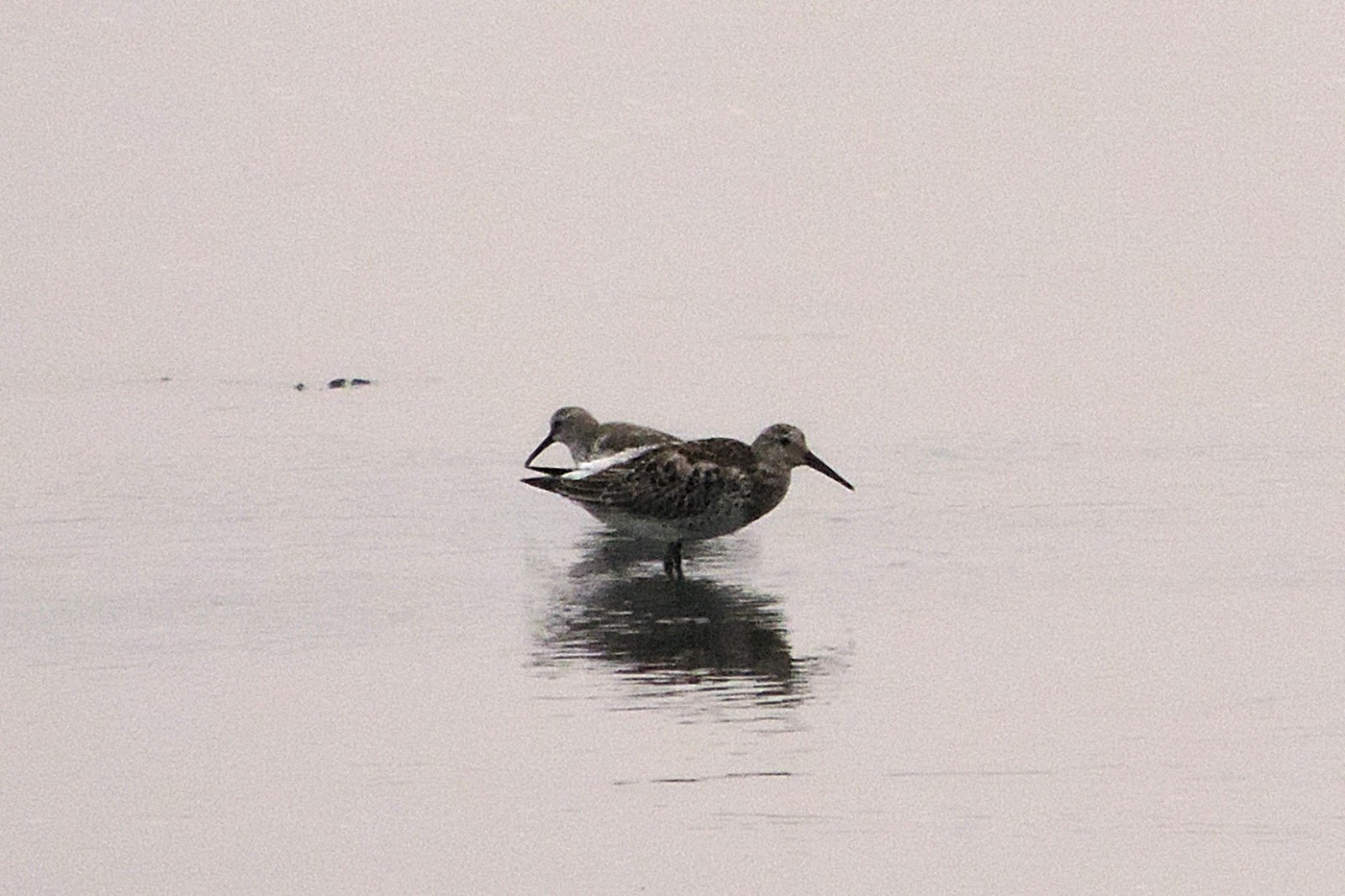
A Great Knot (Obashigiオバシギ) was foraging with other waders.


Grey Plovers (Daizenダイゼン) and Dunlins (Hamashigiハマシギ) are the two main waders which stay and winter here in Yatsuhigata.
 a Grey Plover


a bit artistic??


The water was gradually coming in through the very narrow waterways and suddenly all the cormorants, herons and egrets flew to one spot like it was a competition.
Fish, which were coming in with the tide, were stuck in shallow water and they had no chance against big eaters like those hungry birds!

By the time I got back to the north end of the mudflats, the water covered the whole area which was mudflats just half an hour ago.


A peregrine falcon flew in the sky and all went quiet.
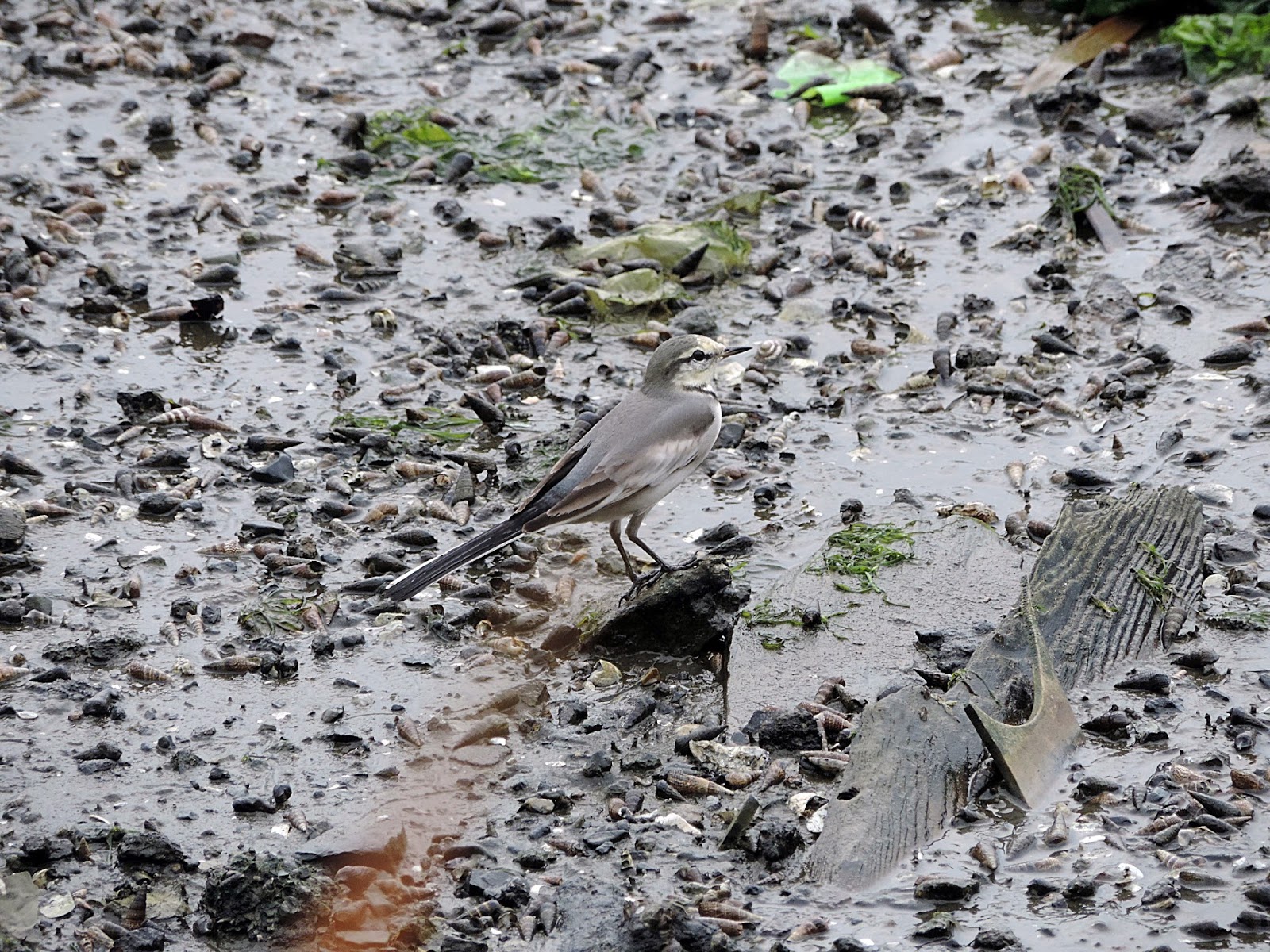
a White Wagtail (Hakusekireiハクセキレイ)