Showing posts with label woodpeckers. Show all posts

Thursday, 3 October 2024

Birding in Taiwan 2024 - III

After leaving Guguan谷關 behind, we headed for Dasyueshan大雪山, one of the high mountains in the middle of the island. 


It was above 30 degrees celsius in the lowlands but in the mountains it became chillier. That's the interesting factor for birding in Taiwan because you can see birds living in the subtropical climate and in the high mountains within a short space of time.


It didn't take long till we spotted a gorgeous male Swinhoe's pheasant (sankeiサンケイ) foraging on the edge of the mountain road.

The pheasants are one of the reasons why lots of birders come to Taiwan. So gracious! 


Birds on the wires over the valley


They are Eastern house martins (iwatsubameイワツバメ)!


Many many of house martins were flying under the bridge over the valley.

a mountain view


A Taiwan barbet (goshikichoゴシキチョウ) was in a tree when we looked down over the edge of the road. We couldn't see much of the red part on its body, maybe it was a young one? or just an angle? 


A flock of White-eared sibia (mimijiro-tsumedoriミミジロツメドリ) enjoyed the fruits in trees.


The weather wasn't great for photo-taking but we saw more than I could show here in the posts.

Saturday, 2 April 2022

Hokkaido IV

The ground of the woodland was still covered with thick snow but we had chance to see woodland birds near feeders.

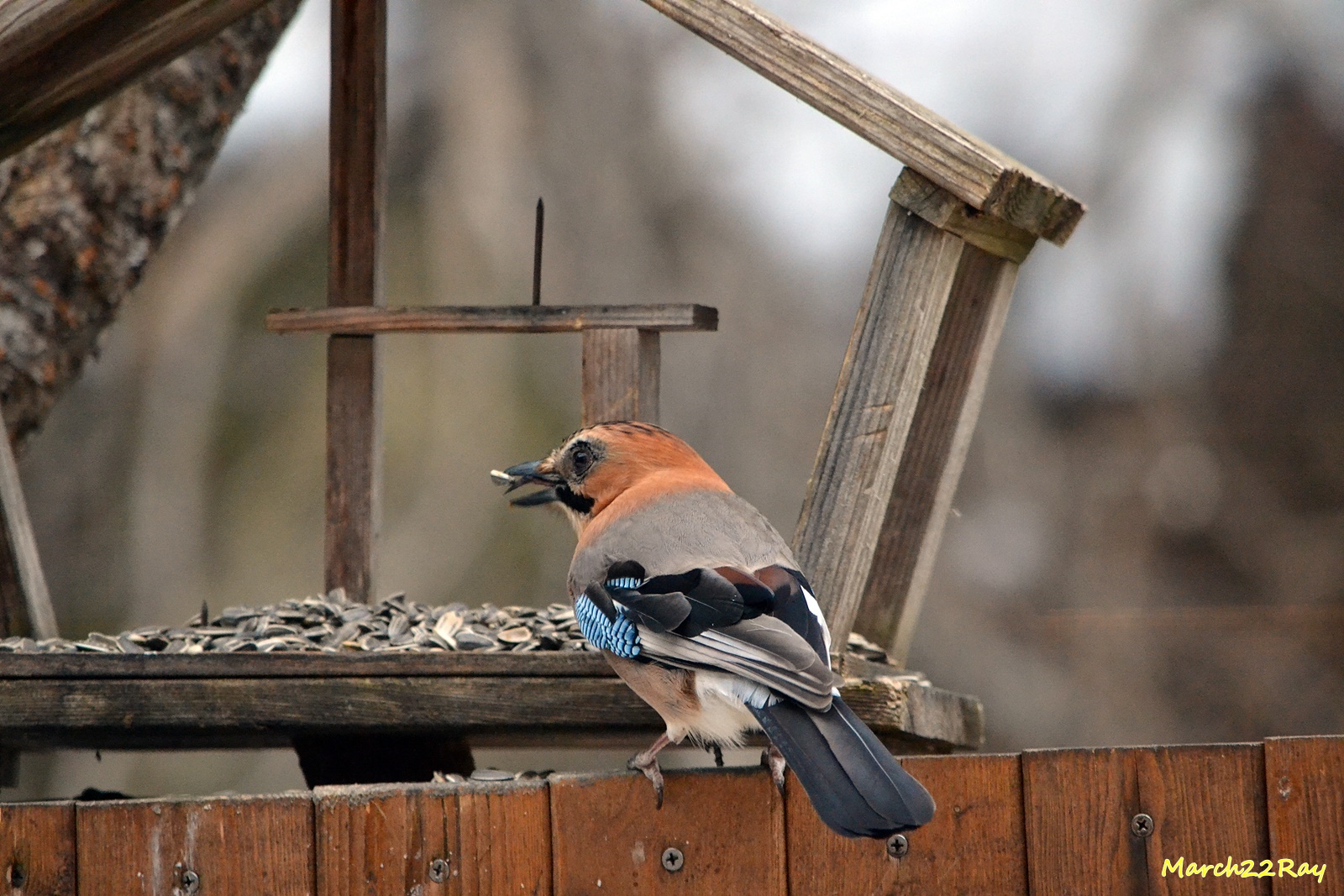
Jay (akesuカケス) - a subspecies found in Hokkaido has a very distinct cinnamon coloured head.


We had never seen so many Jays in one place! 


Nuthatch (Gojukaraゴジュウカラ) - a very white underparts compared with the ones we are familiar in Britain.


Great spotted woodpecker (Akageraアカゲラ)


Marsh tit (Hashibutogaraハシブトガラ)


Dusky thrush (Tsugumiツグミ) & Jay

 Japanese tit (Shijukaraシジュウカラ)


Long-tailed tit (Shimaenagaシマエナガ) - completely white face

Brown-eared bulbul (Hiyodoriヒヨドリ)

Carrion crow (Hashibosogarasuハシボソガラス)

 
Wren (Misosazaiミソサザイ)

All of a sudden, the little ones started to be agitated with alarm calls, and this is why: a beautiful Red fox (Kitsuneキツネ)


 The woodland looks bleak from outside but it surely is getting ready for spring!

Tuesday, 6 April 2021

Miyake-jima

We stayed overnight on Miyake-jima between the ferry rides and while on the island, we spent some time, of course!, on birding.

Japanese White-eye (Mejiroメジロ) 


They are called Shichito-mejiro(シチトウメジロ), considered as a subspecies of the Japanese white-eye found in mainland Japan.


Varied tit (Yamagaraヤマガラ)


The lodging we stayed in had a bird friendly garden, which had a few feeders and a birdbath. Lovely!

The Varied tit is also a subspecies and called the Owston Yamagara(オーストンヤマガラ). Unlike the white-eye, the varied tit shows obvious differences. The ones we see in Chiba have a white forehead, nape and cheeks whereas the Owston's is orange-brown in those parts. I found the calls are a bit different too.


Oriental (Grey-capped) greenfinch (Kawarahiwaカワラヒワ)


Mr Minowa, our guide, said that these greenfinch are likely to be a subspecies called Oo-kawarahiwa (オオカワラヒワ), which are wintering here and soon going back to places like Kamchatka, the Kuril Islands and Sakhalin. Oh dear, I don't think I could follow all of the subspecies!


Japanese Robin (Komadoriコマドリ)


The Japanese robin on mainland Japan is a summer bird but the subspecies found in the Izu Islands are residents and called Tane-komadori(タネコマドリ). The obvious difference is that Tane-komadori lacks a black band between its orange breast and pale grey belly. Their songs are beautiful and they start singing well before the dawn just like the European robin, although the Tane-komadori doesn't sing during the winter.


Japanese pygmy woodpecker (Kogeraコゲラ)


【Warning】 Another subspecies!😂
Miyake-kogera(ミヤケコゲラ) are a subspecies of the Japanese pygmy woodpecker only found in the Izu islands and Yaku-shima but it is almost impossible to tell the difference by sight.
 

Japanese Woodpigeon (Karasubatoカラスバト)


No more subspecies, phew.

The Japanese woodpigeon is only found in islands in the far eastern region. Its extremely secretive and nervous character makes it very difficult to spot them even though their calls are often heard. It would be lucky if you spot them flying very fast between hills or over the canopy but we were truly lucky to see one in a tree. 


We had 8 target birds to see on the island - Izu thrush, Ijima's leaf warbler, Japanese woodpigeon, Owston's varied tit, Wren (subspecies), Japanese robin, Japanese white-eye, Japanese pygmy woodpecker - and thanks to our wonderful guide, Mr Minowa, we had a great view of each of them.

Excellent!


The map shows the locations of the Izu Islands and ferry routes.

You can visit the page of our trip to Hachijo-jima in 2014 by clicking here ↓

Hachijo-jima 1

Hachijo-jima 2 

Hachijo-jima 3


Sunday, 12 January 2020

South Korea VII Royal Tombs

Cemeteries are always wildlife-friendly - little disturbance and lots of green.
Byoungwoo, our excellent bird guide, took us to one of the big royal tombs and we saw a lot of woodland birds there!

Great Spotted Woodpeckers (Akageraアカゲラ)

White-backed Woodpeckers (Ooakageraオオアカゲラ)

After a white-backed woodpecker pecked the tree a bit, a Grey-headed Woodpecker (Yamageraヤマゲラ) took over the place! what a bully!
a bit like Humpty Dumpty...


male Red-flanked Bluetail (Ruribitakiルリビタキ)

Nuthatch (Gojukaraゴジュウカラ)

male Elegant Bunting (Miyama-hoojiroミヤマホオジロ) or Yellow-throated Bunting

Jay (Kakesuカケス)

Water Deer (Kibanoroキバノロ)
Water deer are an endangered species in China but, according to Byoungwoo, they are thriving in South Korea. We saw them quite a few times although they are thought to be very shy. We may have been very lucky:)

King's tomb
The shrines and tombs for high class people have a stone corridor straight from the main shrine building, which is apparently a path for the sacred spirits to be led to the shrine. Interesting.

Korean lunch - dried cod soup & kimchi & little dishes
Korean light supper - cold noodles with chili paste covered with nori seaweed


Thanks to Byoungwoo, we really had a great time in South Korea. Nearly 60 species of birds in two days, some of which were lifers for us. It is a very good number considering the fact that Japan and Korea share many species. And of course we totally enjoyed his excellent choice of Korean cuisine as well!

Byoungwoo's Birding Korea site is here:
https://www.birdingkorea.com/