Showing posts with label common sandpipers. Show all posts

Wednesday, 6 January 2021

Birds in Urayasu

 It doesn't look so wildlife friendly (nor human-friendly) but wildlife somewhat find themselves quite at home on the water and around it.

Lots of Greater scaups (Suzugamoスズガモ)

Apparently, there was one LESSER scaup somewhere in the area but we didn't spend time on searching for it. Does seem like a mission impossible doesn't it?!

Common sandpiper (Isoshigiイソシギ)

Sanderling (Miyubishigiミユビシギ)

Water Pipit (Tahibariタヒバリ)

Vega gull (Segurokamomeセグロカモメ)

Coots (Oobanオオバン)

Slavonian (Horned) grebe (Mimikaitsuburiミミカイツブリ)

a young Peregrine (Hayabusaハヤブサ)


It was a long walk alongside the embankment but was pleasant in the sun and with lots of birds.

Saturday, 16 March 2019

Spain V - Doñana National Park

Small birds were much harder to take photos of as the area was so open like this.

I managed to shoot some of them.

Crested Larks (Kammuri-hibariカンムリヒバリ) - resident


Spanish Sparrows (Supein(Spain)-suzumeスペインスズメ) - resident
Both are females, which very much resemble the female of the House Sparrow.
I failed to take photos of males, which have a chestnut-coloured crown and nape.

Corn Buntings (Hata-hoojiroハタホオジロ) - resident
They were singing every 30 meters or so and probably one of the most sighted birds during our 2 daytrips.

Common Snipes (Tashigiタシギ) - wintering

Western Yellow Wagtails Motacilla flava iberiae 
(no Japanese name ニシツメナガセキレイ?) - summer birds

White Wagtails Motacilla alba alba? (Haku-sekireiハクセキレイ) - resident

Common Sandpiper (Isoshigiイソシギ) - resident
& Corn Bunting & House Sparrow (Ie-suzumeイエスズメ)

Common Sandpipers & House Sparrows - resident

a common view of swampy areas
Little Egrets (Kosagiコサギ), Great Egrets (Daisagiダイサギ), Grey Herons (Aosagiアオサギ), Purple Herons (Murasakisagiムラサキサギ), Western Cattle Egrets (Nishi-amasagiニシアマサギ), Eurasian Spoonbills (Herasagiヘラサギ), Purple Swamphens (Seikeiセイケイ), Glossy Ibis, White Storks were the most common in those habitat. We heard a Great Bittern (Sankanogiサンカノゴイ) booming!

That was about it for the day 1 in Doñana National Park with Vicent.
We counted more than 90 species, which I think was great.

a deer was watching us watching birds:)


Click here for Vicent's Doñana Wings

Wednesday, 14 March 2018

Amami Oshima 1

We had chosen Amami Oshima as our holiday destination in March and we are glad to have done so.

Amami Oshima is

situated about 800 miles southwest from Tokyo, kind of halfway between the southern-most tip of Kyushu and Okinawa, it is extraordinarily rich in nature.

Our first encounter on the island was the Blue Rock Thrush (Isohiyodoriイソヒヨドリ).

female
male

Common Sandpiper (Isoshigiイソシギ)

The Amami White-backed Woodpecker (Ooakageraオオアカゲラ) was far up the hill...


The Amami White-backed Woodpecker is still considered as a subspecies of the White-backed Woodpecker but could be seperated from it eventually.

We wished to see them once more but no luck...

Grey-faced Buzzard (Sashibaサシバ)
They were seen absolutely everywhere, perching on the telegraph poles, electric wires, trees and sometimes on the ground after they'd caught something. We were told that the buzzard is a winter bird in Amami and that it would disappear in a month or so till next autumn.

We saw only a few Kestrels (Chogemboチョウゲンボウ) during our stay.

There must be enough insects, reptiles, mice and other small living creatures to sustain so many birds of prey and other birds on the island:)


We had an experienced, enthusiastic guide, Mr Nagae, from Amami-shizen-gakko (Amami Nature School) for a day. He is an Amami boy born and bred and has a wide range of interests and knowledge - nature, cultural heritages, food, fishing ... basically anything on the island. If anyone has a plan to visit Amami Ohshima, we'd recommend him as your guide! You'll definitely have fun! 

Thursday, 8 January 2015

Oyumi-ike

A big chunk of the bank of Oyumi-ike was washed away by a strong typhoon last year and the re-construction work started, which has made the south-side of the pond more like mudflats.


I'd never seen so many egrets and herons in this place before.
 a Great Egret (Daisagiダイサギ)
 a Grey Heron (Aosagiアオサギ)
 
 a Little Egret (Kosagiコサギ)

A Common Sandpiper (Isoshigiイソシギ) was making the most of the muddy patch.
and so was a White Wagtail (Hakusekireiハクセキレイ).

In the north pond, quite a few ducks were resting.

Some were coming up to me, looking hopeful:) I didn't have anything on me though;

Spotbilled Ducks (Karugamoカルガモ)
a male Teal (Kogamoコガモ)
A female Bull-headed Shrike (Mozuモズ) was hunting quietly and caught something in the stubble, then flew into the thicket.
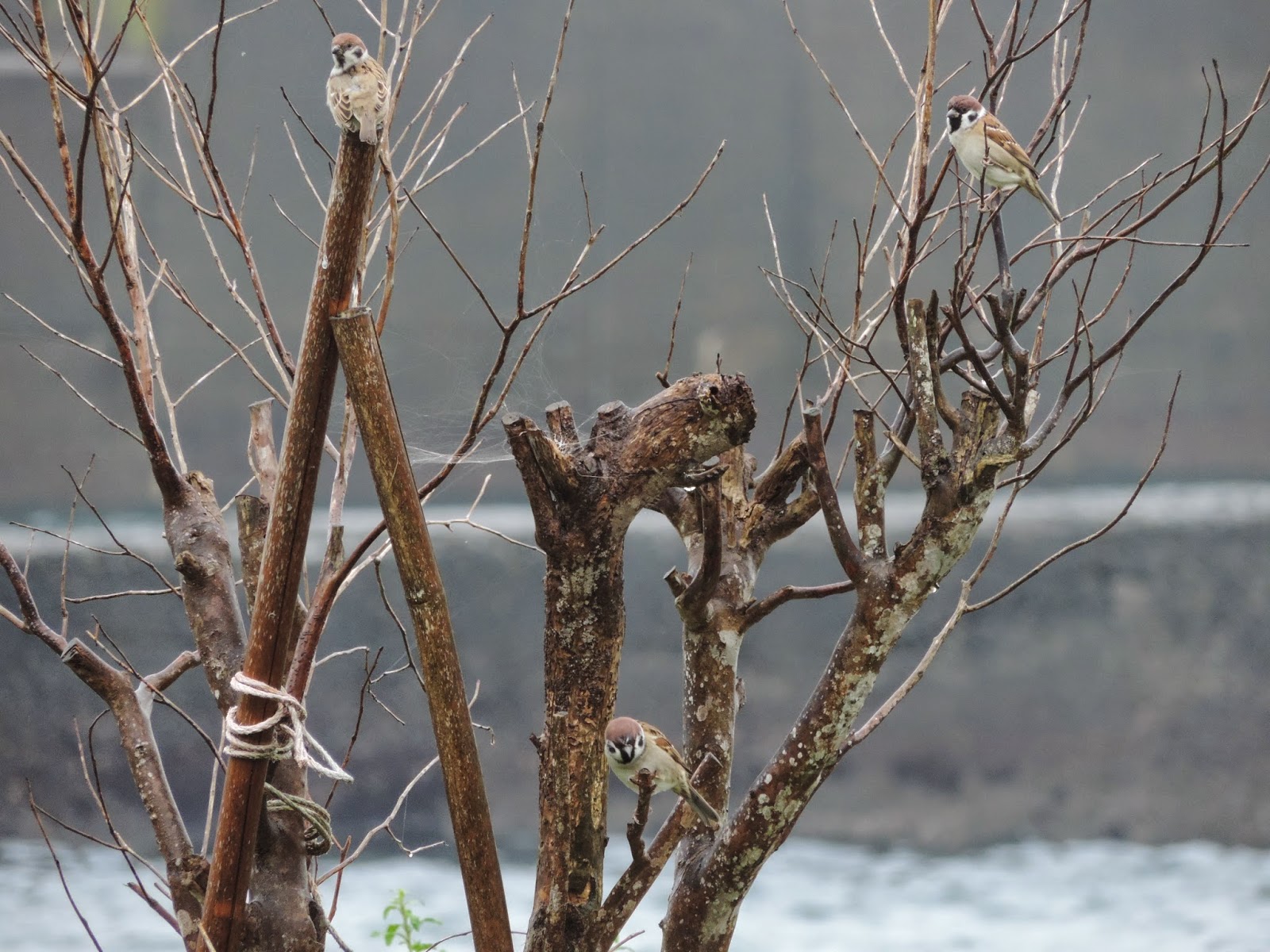
A flock of Tree Sparrows (Suzumeスズメ) looked cautious when the shrike was around.

It was a chilly but pleasant morning by the pond.

Saturday, 1 November 2014

Sunosaki, Tateyama

In spite of the bad weather, there was plenty to see at a small fishing port in Sunosaki, Tateyama.


A Common Sandpiper (Isoshigiイソシギ) was foraging on a tiny patch of green by the port.

A White Wagtail (Hakusekireiハクセキレイ) came right up to our car.

A young Vega Gull (Segurokamomeセグロカモメ) was pecking something on the rock.

a male Meadow Bunting (Hoojiroホオジロ)

a female Meadow Bunting

Tree Sparrows (Suzumeスズメ) and Meadow Buntings were sharing the feeding ground.

Every time a fishing boat came back to the port from its day's work, gulls, crows and kites started circling above it.

There must have been nearly 100 of them all together.

It was a miserable day all day, I mean, weather-wise. Very unfortunate for bird-watching. sigh...