Showing posts with label curlews. Show all posts

Monday, 2 September 2019

Curlews

Oh it's already September...
I was lucky to be involved in some bird surveys this summer and time was just flying by (when having fun! indeed!).

Time for migration. Yes!
My husband and I are not great at identifying waders but at least we tried:)
 (if our identification is wrong, please leave your comment!)

In the UK, when we saw a curlew, it was definitely a Eurasian curlew. BUT!
In Japan we have the Eurasian Curlew AND the Far Eastern Curlew and both can be seen at the same place at the same moment.
Hmmm...


If my memory is right, I was told that the ones in the first 2 pictures are Eurasian Curlews (Daishakushigiダイシャクシギ) and the last one is a Far Eastern Curlew (Hourokushigiホウロクシギ).

a Far Eastern Curlew

This estuary has a very narrow sandy area and birds land quite close to the embankment where people can stand and watch them, which is lucky for us birdwatchers.

another Far Eastern Curlew. The far eastern curlew has a browner plumage than the Eurasian ones in general and its belly and vent are buff coloured (compared with the white belly and vent of the Eurasian Curlew)

Even though we were not sure which one was which at that time, the curlews are still a gorgeous bird to observe:)

Friday, 11 May 2018

Paddy Fields in Sakura

My new bird-watching friends living in Sakura asked me out to see Grey-tailed Tattlers and Whimbrels on paddy fields near their places.

Grey-tailed Tattlers (Kiashishigiキアシシギ)


Whimbrels (Chushakushigiチュウシャクシギ)


Both species are migratory birds and only stop over on the paddy fields around here in spring. Unfortunately, the paddy fields in Japan have no water when they are on their way back south in autumn.

The estuaries, mudflats and beaches in Japan have become catastrophic as habitats for wildlife, and paddy fields have started to attract attention as important areas for wildlife. Some wildlife-friendly projects, such as 'Fuyumizu-tambo' in which the rice farmers keep water even after harvesting the rice so that wintering waterfowl can have extra places to rest and forage, and 'Tageri-mai' in which the rice farmers keep their paddy fields as wildlife friendly as possible especially in favour of wintering Tageri 'Lapwings', have been developed and hopefully, it will be acknowleged and supported by many more people.


Friday, 20 April 2018

Inage Kaihin Beach

The Little Tern season has come again and I went to Inage Kaihin Park to help put up the ropes around the area where Little terns are likely to make their colony.


The project leader said he'd seen 2 little terns already, so, fingers crossed!

After the hard work, I walked in the park and looked for the signs of spring:)

Yes!

This Black-headed Gull (Yurikamomeユリカモメ) turned into summer plumage already.
BH gulls don't breed in the area so today could be the last day to see them on this beach for a while.

On the concrete breakwater were a Whimbrel (Chushakushigiチュウシャクシギ),
Sanderlings (Miyubishigiミユビシギ),
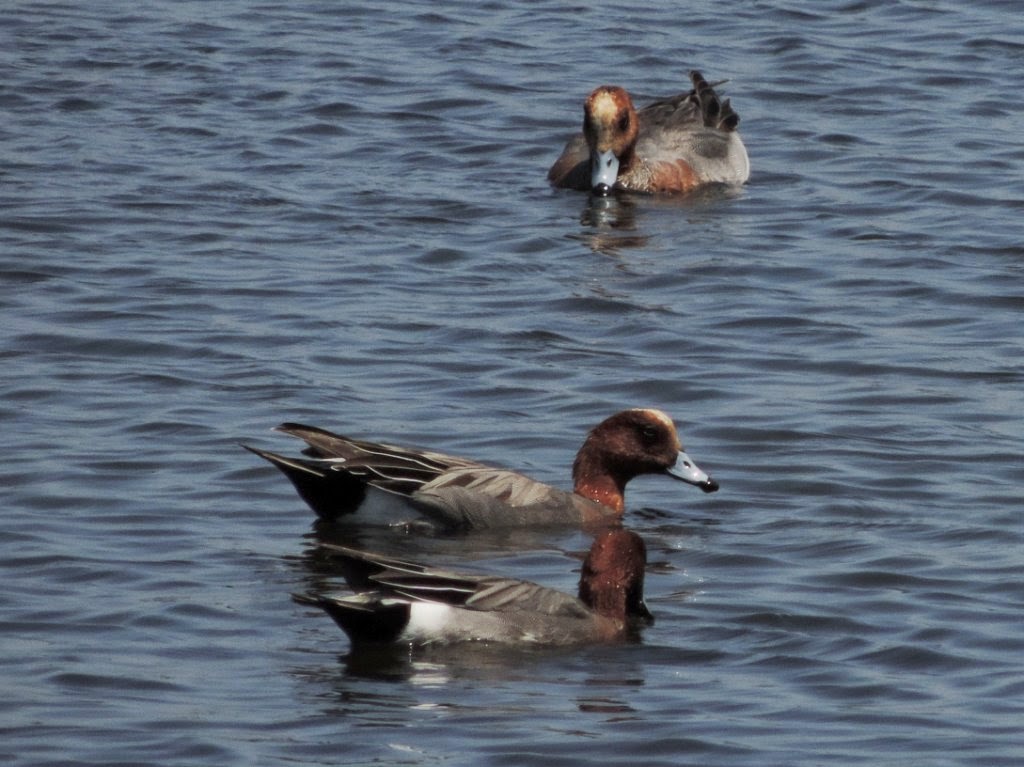
 and Wigeons (Hidorigamoヒドリガモ).

Whimbrels and Sanderlings are stopping on their way to their breeding grounds and Wigeons are wintering birds and most of them have left for their breeding grounds.

Some Greater Scaups (Suzugamoスズガモ) were still there with the Wigeons.

Another BH Gull was foraging on the shore, busy running up and down!

Sunday, 27 April 2014

Yatsuhigata

We went down to Yatsuhigata to see migrant birds on the mudflats.

When we got there, it was at low tide so all the waders were further out.

Lots of them were in their beautiful summer plumage - mainly Bar-tailed Godwit (Oosorihashishigiオオソリハシシギ), Turnstone (Kyoujoshigiキョウジシギ), Dunlin (Hamashigiハマシギ).

Some Whimbrels (Chushakushigiチュウシャクシギ) were on their own. One of them had a blue ring on his leg but it was too fat to read the number.

Lesser Sand Plovers (Medaichidoriメダイチドリ) and

Turnstones were foraging/resting on oyster shells. They were so well camouflaged it was hard to spot them at first.

Black-winged Stilts (Seitakashigiセイタカシギ) were ready to breed in the freshwater pond there.

Some wintering ducks were still there. Male Wigeons (Hidorigamoヒドリガモ)
and a female Wigeon.


Shovellers (Hashibirogamo
ハシビロガモ) were resting on the water.


A juvenile Grey Heron
(Aosagiアオサギ)


A Little Egret (Kosagiコサギ)
with a tiny fish in its beak


A pair of rays in the shallow water